YouTube · @alisafari26
Videos
I’m an Information Systems researcher, and I share what I’m learning along the way. Some videos are about the everyday side of research, like finding papers, reading them, and actually getting the writing done. Others are bigger topics I’m curious about, like quantum computing and what it could mean for IS.
- 72
- videos
- 5
- series
- 13h
- of lessons
Series 01 · 14 lessons · 3 h 09 min
Quantum Computing for Information Systems
From Basics to Research Questions
What does quantum computing mean for Information Systems? This series starts with qubits, measurement, and small simulator demos. Then we look at how to evaluate quantum claims, what post-quantum security changes for organizations, and what IS researchers can study next.
You can start without a background in quantum computing. Follow the lessons in order and use the sources in each video description to read further.
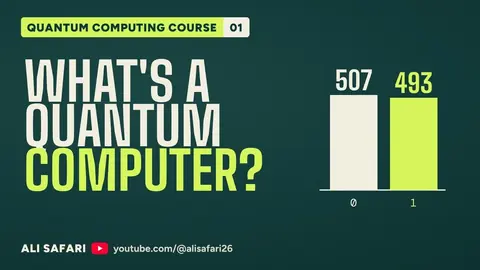 11:5901What Is a Quantum Computer? Qubits and Measurement with Qiskit
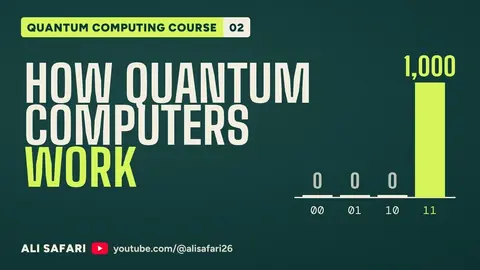 11:0402How Does a Quantum Computer Work? Interference and Entanglement
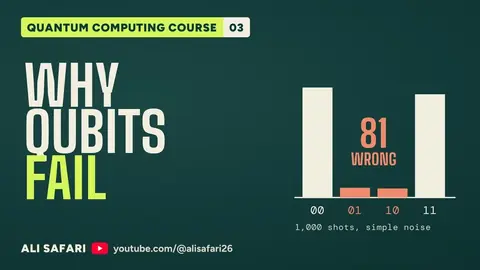 13:0803Why Are Quantum Computers Hard to Build? Noise and Error Correction
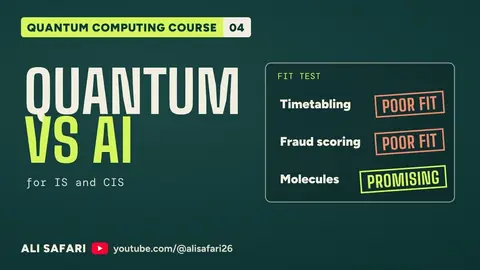 14:5004Quantum Computing vs AI: What Is the Real Connection?
 14:5005Is Quantum Computing Overhyped? How to Check a Quantum Claim
 16:0406Will Quantum Computers Break Encryption? What Breaks and What Does Not
 15:3007How to Check if a Website Uses Post Quantum Encryption
 12:2408Who Owns Post Quantum Migration? Governance and Crypto Agility
 16:4409When Do We Have to Switch to Post Quantum Cryptography?
 11:0310Quantum Computing Skills for IT and Information Systems Professionals
 14:4111Quantum Computing Research Papers in Information Systems
 11:1212Theories for Quantum Computing Research in Information Systems
 12:0113Post-Quantum Migration in Organizations: What the Research Found
 13:5914Quantum Computing PhD Topics in Information Systems
Series 02 · 20 lessons · 3 h 14 min
SmartPLS 4: Practical SEM Course
Learn SmartPLS 4 through real software demonstrations, survey data and research papers. We build a model, compare PLS, PLSc and CB-SEM, and check what the results can and cannot tell us. With Ali Safari.
 9:4401SmartPLS 4 Tutorial: Build Your First PLS-SEM Model | Lesson 1
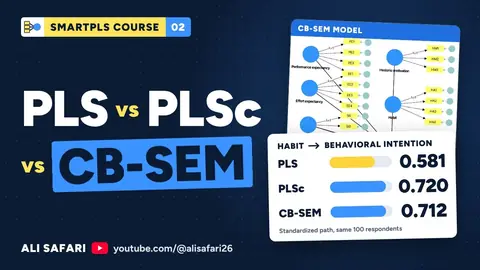 12:5302PLS-SEM vs PLSc vs CB-SEM in SmartPLS 4 | Lesson 2
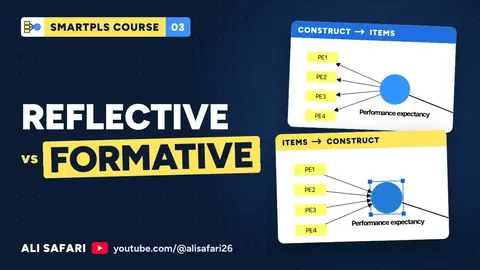 13:3103Reflective vs Formative Measurement Models in SmartPLS 4 | Lesson 3
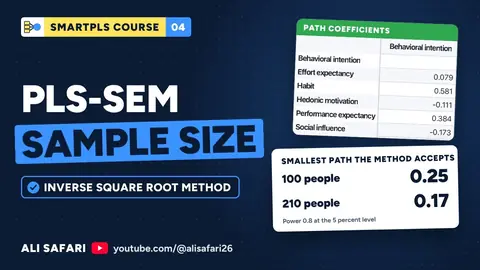 13:5104PLS-SEM Sample Size: How Many Respondents Do You Need? | SmartPLS 4 Lesson 4
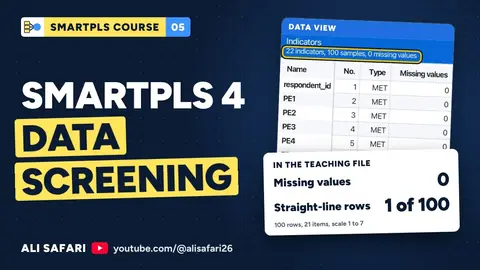 11:0605SmartPLS 4 Data Screening: Missing Values & Straightlining | Lesson 5
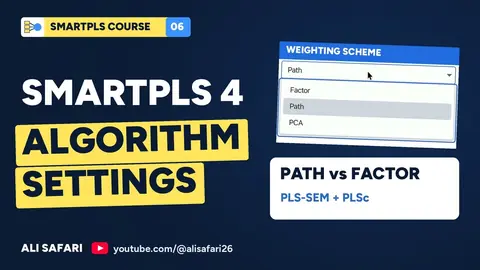 8:3406SmartPLS 4 Algorithm Settings: Path vs Factor Weighting | Lesson 6
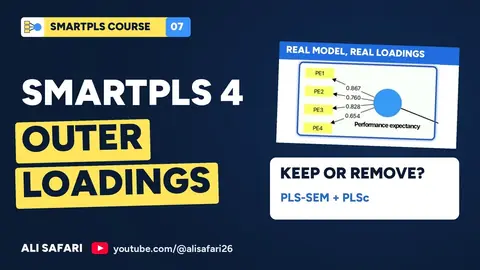 9:3107SmartPLS 4 Outer Loadings: When Should You Remove an Item? | Lesson 7
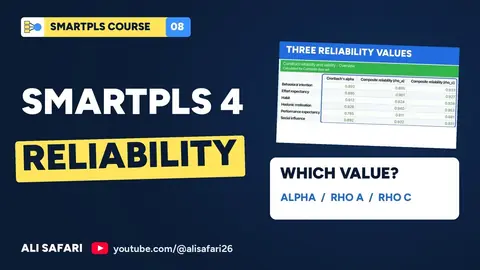 8:5008SmartPLS 4 Reliability: Cronbach's Alpha, rho A and rho C | Lesson 8
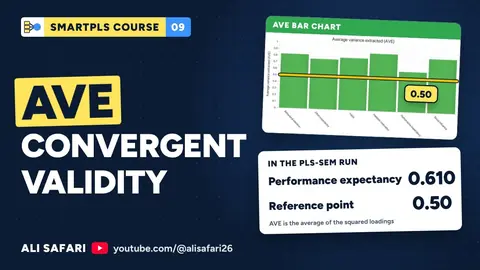 8:1709SmartPLS 4 AVE: How to Check Convergent Validity | Lesson 9
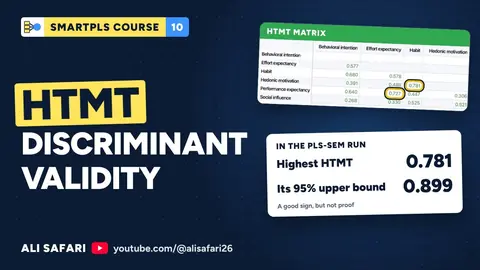 10:5910SmartPLS 4 HTMT: Discriminant Validity and Bootstrap Intervals | Lesson 10
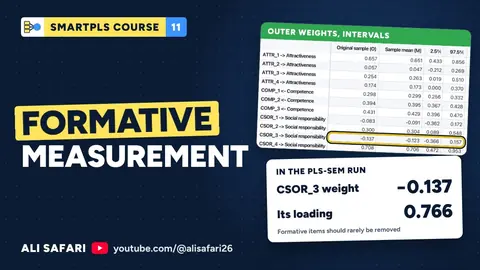 6:4411Formative Measurement in SmartPLS 4: Weights, Loadings and VIF | Lesson 11
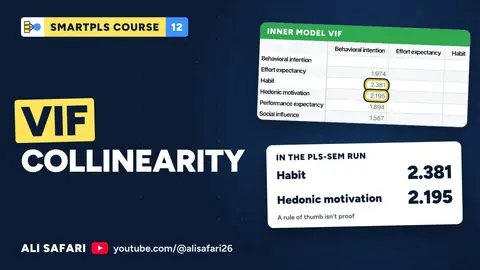 7:5512Collinearity and VIF in SmartPLS 4 | Lesson 12
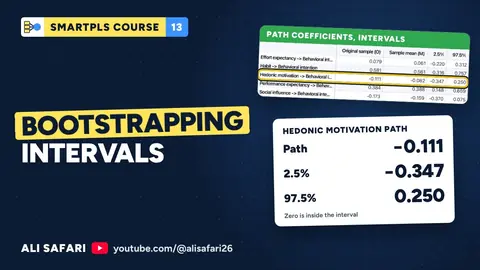 8:3113Bootstrapping in SmartPLS 4: p Values and Confidence Intervals | Lesson 13
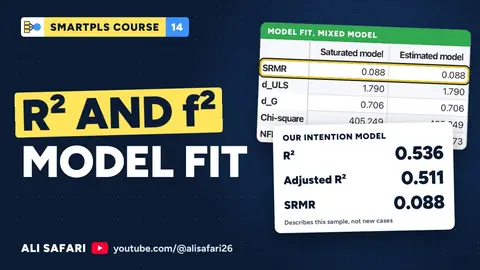 9:3114SmartPLS 4 Model Fit: R², f² and Path Coefficients | Lesson 14
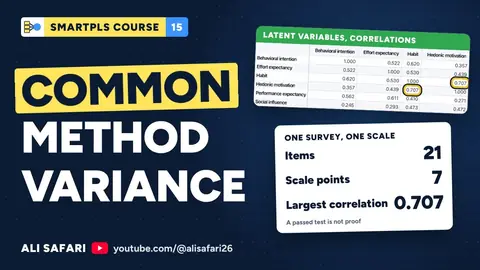 8:2815Common Method Variance in SmartPLS 4: What Can You Check? | Lesson 15
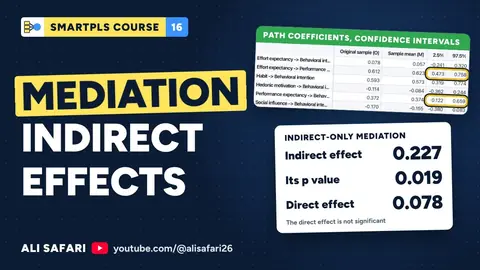 8:4916Mediation in SmartPLS 4: Direct and Indirect Effects | Lesson 16
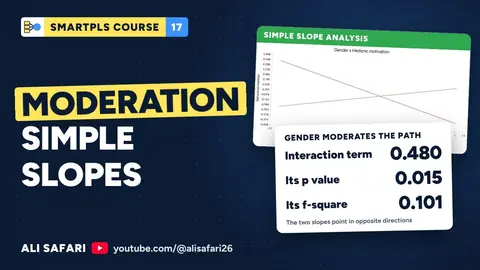 9:5217Moderation in SmartPLS 4: Interaction Effects and Simple Slopes | Lesson 17
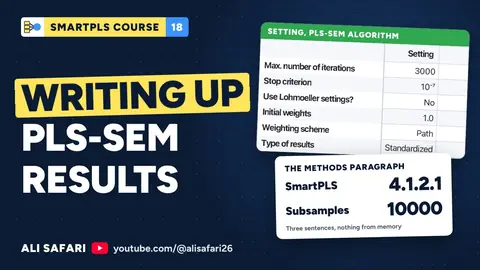 10:3418Writing Up PLS-SEM Results in SmartPLS 4 | Lesson 18
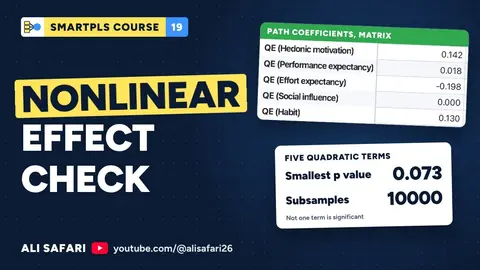 9:3619How to Check Nonlinear Effects in SmartPLS 4 | Lesson 19
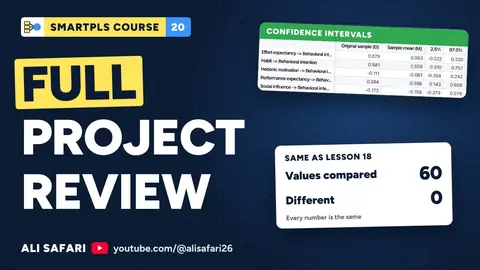 6:1620Reproduce a Full PLS-SEM Project in SmartPLS 4 | Lesson 20
Series 03 · 10 lessons · 1 h 12 min
How to Write a Research Proposal
Practical Workshop
Working on a research proposal and unsure how the pieces fit together? We'll build one around a running example, from the research problem and literature gap to the question, study design and contribution.
Each lesson uses published papers to show what the authors did, then gives you an exercise to try with your own project. The example proposal is for teaching and does not report research findings. Sources and exercises are in each video's description.
Made for master's and PhD students. Start with lesson 1 and work through the series in order.
 6:1901How to Write a Research Proposal That Answers Three Questions | Research Proposal Workshop 1
 6:3002How to Write a Research Problem for Your Proposal | Research Proposal Workshop 2
 8:2603How to Check Your Research Gap Before You Claim It | Research Proposal Workshop 3
 6:5404How to Write a Research Question, Aim and Objectives | Research Proposal Workshop 4
 7:0505How to Write the Literature Review in a Research Proposal | Research Proposal Workshop 5
 6:5406How to Choose a Theoretical Lens for Your Research Proposal | Research Proposal Workshop 6
 7:3007How to Write the Research Design Section of a Proposal | Research Proposal Workshop 7
 6:5908Data, Sample Size and Analysis in a Research Proposal | Research Proposal Workshop 8
 7:1509Ethics, Feasibility and Timeline in a Research Proposal | Research Proposal Workshop 9
 8:1510Contribution, Title and Abstract for a Research Proposal | Research Proposal Workshop 10
Series 04 · 5 lessons · 30 min
Research Tools for Students: Zotero, Literature Search & Academic Writing
Practical tutorials for students and researchers. Learn how to use research tools through real examples, from adding citations and building a reference list in Zotero and Word to finding and organizing academic sources. Follow along, check your results, and use the steps in your own research.
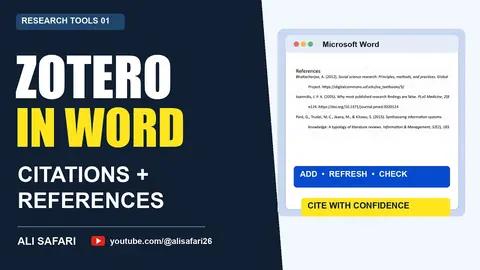 4:4701How to Use Zotero in Word: Add Citations & Create a Bibliography
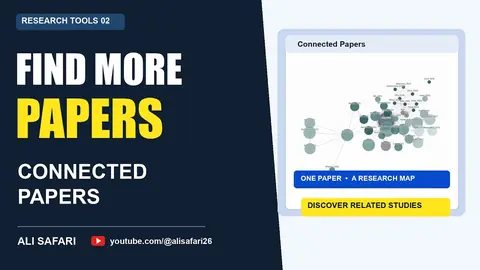 6:2902Connected Papers Tutorial: Find Related Research from One Paper
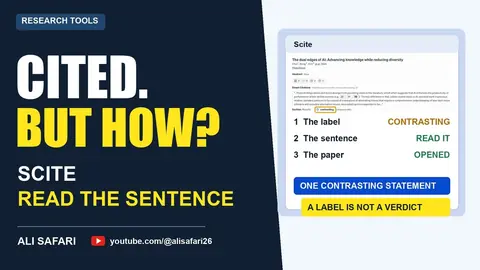 5:3203Scite Tutorial: Does a Contrasting Citation Really Disagree?
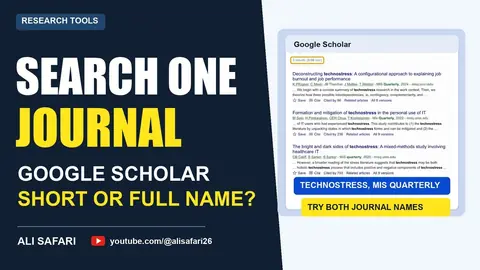 5:2204Google Scholar Advanced Search: Find Papers in a Specific Journal
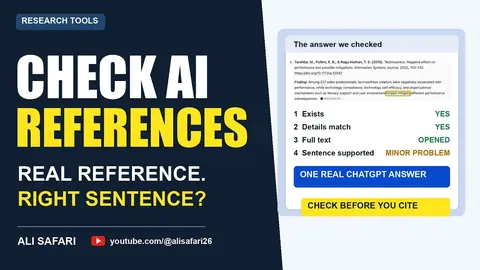 7:2405How to Check AI-Generated References (With a Real ChatGPT Example)
Series 05 · 20 lessons · 4 h 20 min
Research Basics: Research Methods for PhD Students
Learn research methods for a PhD or master's project. I use examples from Information Systems to show how a research question becomes a study you can actually carry out.
The lessons cover theory, hypotheses, literature reviews, sampling, measurement, and research design. You'll also see how surveys, experiments, case studies, qualitative analysis, and mixed methods answer different kinds of questions.
Start with the first lesson and try the short exercises with your own research idea. Each lesson links to its sources so you can read further.
 13:3701What Is Scientific Research? A Clear Starting Point for Your PhD
 17:0402Research Paradigms Explained: Ontology, Epistemology and Information Systems
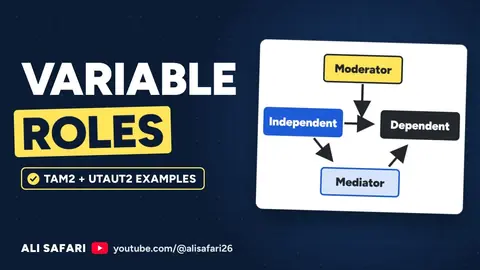
 9:2803Concepts, Constructs and Variables Explained | Research Basics
 7:1704Proposition vs Hypothesis: What's the Difference? | Research Basics
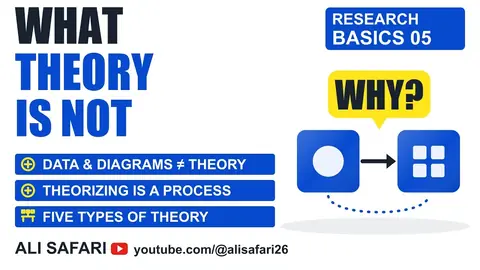 7:1905What Is Theory in Research? Examples and Common Misconceptions
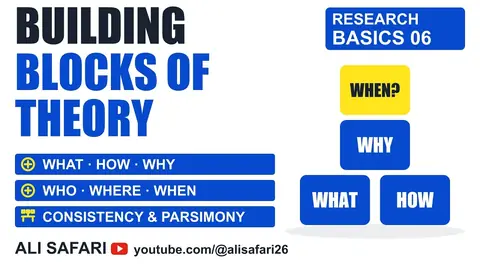 7:1606Elements of a Theory: What, How, Why and When
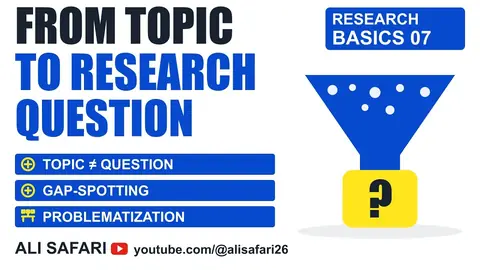 7:2807From Topic to Research Question: Gap-Spotting and Problematization | Research Basics
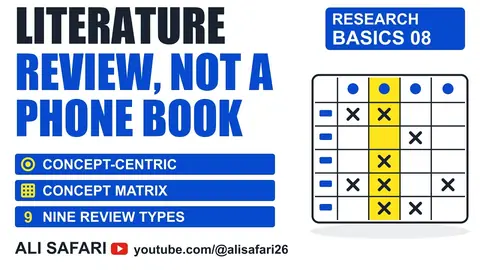 14:3108Literature Review Explained: How to Search and Organize Research
 15:2109Research Design Explained: How to Plan a Study
 15:0610Measurement in Research: Constructs and Four Levels of Measurement
 15:3911Reliability and Validity: How to Check Your Measures
 14:4712Sampling Methods in Research: Choosing a Sample and Sample Size
 14:3313Survey Research: Strengths, Biases and What IS Studies Got Wrong
 13:4314Experimental Research: Cause and Effect, and What Can Still Go Wrong
 15:4315Case Study Research: How It Works in Information Systems
 14:2516Interpretive Research in Information Systems: Methods and Principles
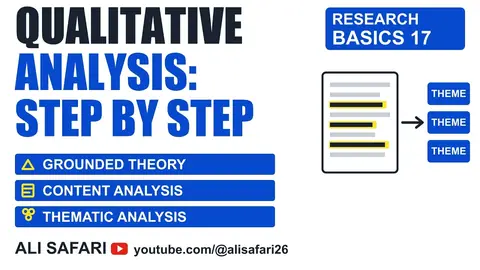 15:1817Qualitative Data Analysis: Grounded Theory, Content Analysis, and Thematic Analysis
 14:0518Research Ethics: Protecting Participants and Protecting the Truth
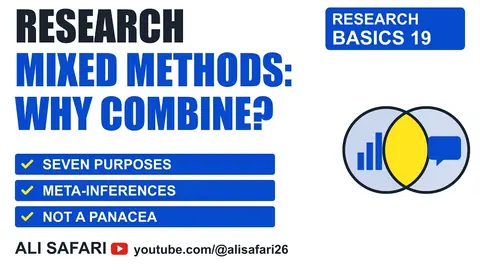 14:1519Mixed Methods Research: Why Combine Qualitative and Quantitative Methods?
 12:5720What Makes a Research Contribution? Putting Research Basics Together
If you’re studying IS or CIS, or just starting your own research, I hope you find something here that helps.
Videos play from YouTube once you press play.